Inspirational, lifestyle, News, and everything in the middle
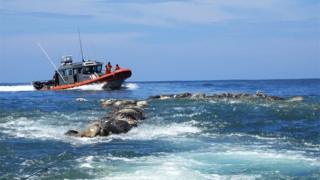
Fishermen in the southern Mexican state of Oaxaca have found about 300 dead sea turtles entangled in fishing nets.
Get link
Facebook
X
Pinterest
Email
Other Apps
The find comes just days after another 102 olive ridley turtles were found dead in neighbouring Chiapas state.
Olive
ridley turtles, which lay their eggs on the beaches of a number of
Mexican states between May and September, are considered to be facing a
high risk of extinction in the wild.
The cause of their death is still under investigation.
It is not clear whether they got caught in the nets while still alive or were already dead when they became entangled. Experts say they could have been killed by harmful algae, fish hooks or could have suffocated while trapped in the nets.
Mexico banned the capture of sea turtles in 1990 and there are stiff penalties for anyone killing them.
A specialised federal attorney is investigating the case.
Although it isn’t currently available, the forthcoming coronavirus vaccine could potentially land you in jail or face a hefty fine if you refuse to take it. Dating back to a law initially enacted in 1905, the United States has the full authority to place anyone in jail or fine them for refusing the vaccine. ABC10News reports, during a recent interview Dov Fox, a law professor and the Director of the Center for Health Law Policy and Bioethics at the University of San Diego, explained just how much power the U.S. has in regard to forcing citizens to take a vaccine or accept the consequences. “States can compel vaccinations in more or less intrusive ways. They can limit access to schools or services or jobs if people don’t get vaccinated. They could force them to pay a fine or even lock them up in jail.” The legal precedent dates all the way back to 1905. Citing the landmark U.S. Supreme Court case, Jacobson v. Massachusetts—in which the court ruled Massachusetts had the authority to fine...
On iOS , this one’s easy. If you delete a photo (or all of your photos ever), they’re not gone for good the moment you tap the trash can icon. Scroll down through your albums in Photos. The very last one you should see—in the main “Albums” listing, not the secondary “My Albums” listing—is an album called Recently Deleted. You can’t miss it. Its icon is boring, gray, and trash-can-shaped. Tap that, and you’ll be able to restore anything you accidentally deleted. Your iPhone will keep deleted photos around for just around a month or so. the dates listed on the photos are countdowns. Once they reach zero, the photos are automatically exiled from your device forever. The same is true for any photos you delete on iCloud. They aren’t gone forever—at least, not initially. Just go restore them from the Recently Deleted folder. Ta-da. Android users have a similar deal. First off, there’s no reason why you shouldn’t be automatically backing up all of your photos to Google Photo...
A bribery settlement and the fall in the pound have pushed engineering giant Rolls-Royce to a record loss. The jet engine maker reported a loss before tax of £4.6bn for 2016. However, once one-off costs have been stripped out, the company's underlying profit was better than many experts had predicted. Rolls-Royce agreed to pay £671m to settle corruption cases with UK and US authorities and it has written off £4.4bn from currency related contracts. Underlying profits fell to £813m, down from £1.4bn the previous year, although the fall was much less than many analysts had forecast. Rolls-Royce Holdings Rolls-Royce, which has been a completely separate company to the car-maker since 1971, said the outlook for this year was for a "modest performance improvement", while chief executive Warren East said more needed to be done to improve profit margins. Mr East took over as chief executive in 2015 with the task of turning round the struggling company. It i...
Comments
Post a Comment